Beijing
China's ancient and modern capital
Beijing (北京, Běijīng) is the capital of the People's Republic of China and one of the country's four direct-administered municipalities, located on the North China Plain about 150 kilometers from the Bohai Sea. The municipality covers a large area that includes the central districts within the old Ming-era city walls, surrounding suburban districts, and mountainous counties to the west. With a population of over 21 million, Beijing is the seat of China's central government and one of the world's most important political capitals, as well as a major center of education, with more universities than any other Chinese city.
Beijing has served as China's capital for most of the past eight centuries. The city took much of its present form under the Ming dynasty, which completed the Forbidden City, the Temple of Heaven, and the surviving city wall in the early 15th century, when the Yongle Emperor moved the capital here from Nanjing in 1420. The Qing continued to use Beijing as their capital until the dynasty fell in 1911. The 20th century brought the May Fourth Movement, the 1949 founding of the People's Republic in Tiananmen Square, and the 2008 Summer Olympics, each of which reshaped large parts of the urban fabric.
Today Beijing offers an unusually wide range of attractions, from the vast palace complex of the Forbidden City at the city's center to the crescent of mountains to the west where the Great Wall winds along the ridges. Within the old city, the hutong alleyways, the Lama Temple, and the Summer Palace preserve older layers of Beijing life, while the National Museum, the National Centre for the Performing Arts, and the Olympic Park reflect its more recent ambitions. The city's many parks, lakes, and former imperial gardens also provide green relief within the otherwise dense urban grid.
Highlights
Forbidden City
The Forbidden City (紫禁城, Zǐjìnchéng) is the largest palace complex in the world and the symbolic heart of imperial China. Built between 1406 and 1420 under the Yongle Emperor, it served as the home of 24 Ming and Qing emperors and the political center of Chinese government for nearly 500 years.
Today the palace is the Palace Museum, displaying imperial art, calligraphy, ceramics, and the throne halls where emperors held court. Its golden-tiled roofs, red walls, and vast courtyards sit at the exact center of Beijing's old city axis, facing Tiananmen Square to the south and Jingshan Park to the north.

Great Wall at Mutianyu
The Great Wall at Mutianyu (慕田峪, Mùtiányù) is one of the best-preserved and most scenic sections of the Great Wall of China, winding through forested mountains about 70 kilometers northeast of central Beijing. Originally built in the Northern Qi dynasty and rebuilt in the Ming, it is known for its dramatic watchtowers and steep forested ridges.
Unlike the more crowded Badaling section, Mutianyu offers a relatively relaxed experience with cable-car and toboggan options. The wall here follows the mountain contours closely, making it one of the most photogenic stretches of the entire fortification system.

Attractions


National Museum of China
One of the world's largest museums, on Tiananmen Square


Temple of Earth
Tranquil imperial ceremonial park in northern Beijing


Qianmen Street
Historic pedestrian boulevard south of Tiananmen Square


Prince Gong's Mansion
Largest preserved princely residence in Beijing


National Centre for the Performing Arts
Futuristic titanium dome near Tiananmen Square


Wansong Laoren Pagoda
Hidden ancient pagoda with a charming bookshop

798 Art District
Contemporary art hub in repurposed factory buildings


Summer Palace
Sprawling imperial lakeside retreat with gardens and temples


Great Wall at Mutianyu
Restored stretch of the Great Wall amid forested mountains

Zhoukoudian Peking Man Site
UNESCO World Heritage prehistoric excavation site
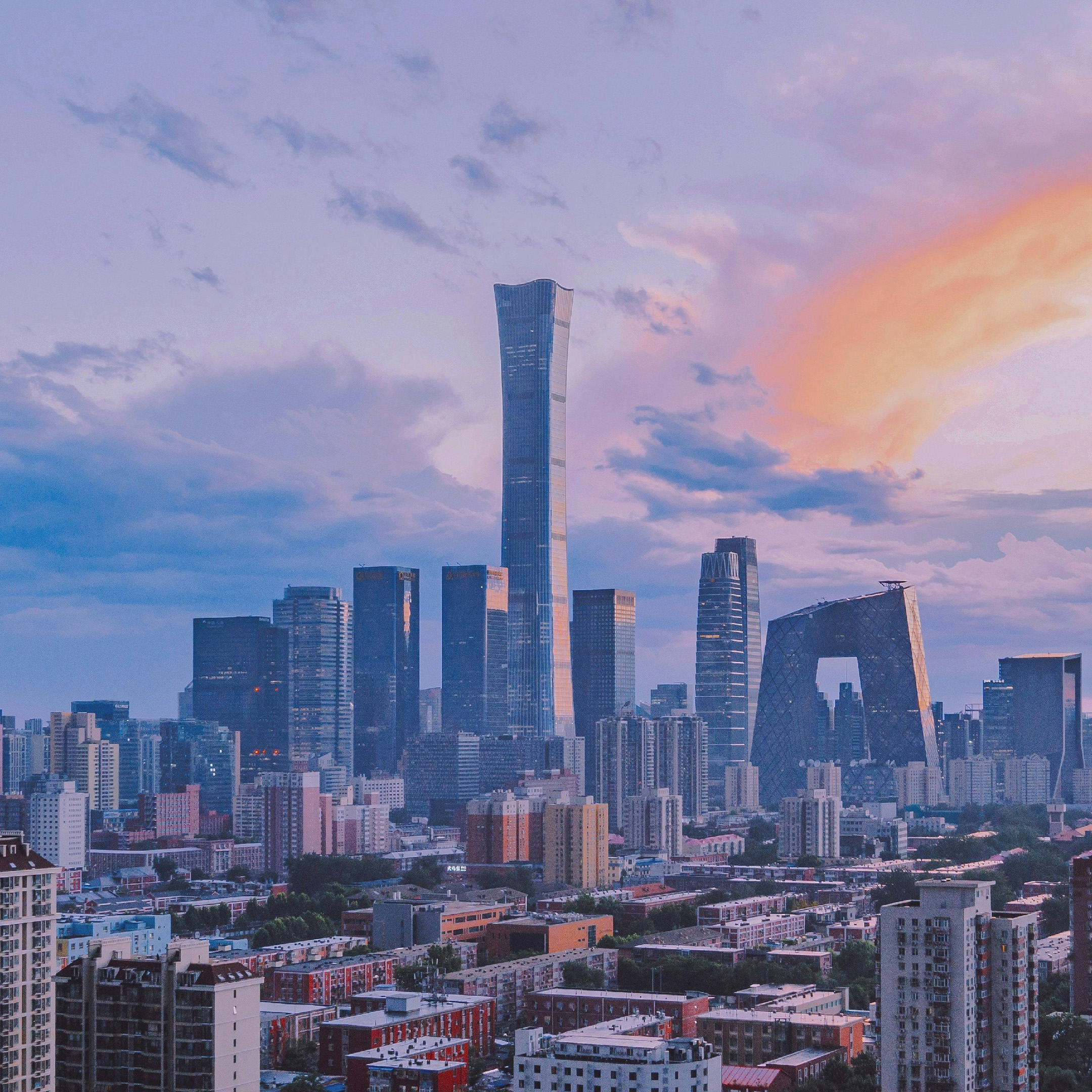
Beijing Skyline
Beijing

