Guangzhou
China's vibrant commercial hub
Guangzhou (广州, Guǎngzhōu), long known to the world as Canton, is the capital of Guangdong Province in southern China, situated on the Pearl River about 120 kilometers upstream from the river's mouth at the South China Sea. The municipality covers a large area that includes the historic core on the north bank of the Pearl, the old foreign concession island of Shamian, and extensive suburban districts, with a population of over 15 million. Guangzhou is the largest city in southern China, a major port, and the economic and cultural heart of the Cantonese world.
Guangzhou's history reaches back over 2,200 years, making it one of China's oldest continuously inhabited trading ports, and for much of that history it was the only Chinese city open to foreign commerce. The Canton trade system of the Qing dynasty funneled Western trade through a small body of licensed merchants, and the city was the principal flashpoint of the First Opium War, which opened it fully to foreign trade after 1842. The biannual Canton Fair, established in 1957, revived the city's international trading role under the People's Republic, and Guangzhou has been at the center of the Pearl River Delta's reform-era boom.
Today Guangzhou offers visitors a rich mix of colonial-era riverfront, Cantonese culinary culture, old temples, and a fast-modernizing skyline. The leafy island of Shamian preserves the former British and French concession, the Chen Clan Academy displays ornate Cantonese wood and stone carving, and the Bright Filial Piety Temple and the Six Banyan Tree Temple record the city's Buddhist past. The Canton Tower and the Pearl River skyline, the old lanes around Beijing Road, and the city's famous dim sum and roast-meat restaurants round out the offerings of China's great southern metropolis.
Highlights
Chen Clan Ancestral Hall
The Chen Clan Ancestral Hall (陈家祠, Chénjiā Cí), completed in 1894, is widely considered the finest example of Cantonese decorative architecture, with elaborate wood, brick, stone, and ceramic carvings covering every surface.
Originally built by members of the Chen clan to provide accommodation for family members traveling to Guangzhou for imperial examinations, it now houses the Guangdong Folk Art Museum and remains one of the city's most rewarding historic sites.

Shamian Island
Shamian Island (沙面岛, Shāmiàn Dǎo) is a quiet, leafy enclave on the Pearl River that served as a British and French concession from the late 19th century until 1946.
Its pedestrian avenues are lined with plane trees and well-preserved colonial villas, churches, and consulates, giving it an atmosphere unlike anywhere else in Guangzhou and making it a popular spot for photography and a relaxed stroll.

Attractions

Yuexiu Park
Guangzhou's largest downtown park with historic landmarks

Beijing Road
Ancient commercial boulevard with excavated road surfaces

Museum of the Nanyue King
Ancient royal tomb and extraordinary burial treasures

Sun Yat-sen Memorial Hall
Octagonal memorial hall and gardens honoring the revolutionary leader


Temple of the Five Immortals
Daoist temple at the mythical birthplace of Guangzhou


Redtory Art District
Creative compound in converted Soviet-era factories

Pearl River Night Cruise
Evening cruise through Guangzhou's illuminated waterfront


Chen Clan Ancestral Hall
Masterpiece of Cantonese decorative architecture


Shangxiajiu
Famous Cantonese food and shopping street with arcade buildings

Xiguan Antique Street
Covered arcade of antique dealers and curiosities

Huacheng Square
Grand civic plaza of Guangzhou's new central district

Guangdong Provincial Museum
Comprehensive museum of southern China's heritage

Guangzhou Opera House
Zaha Hadid-designed riverside performance venue


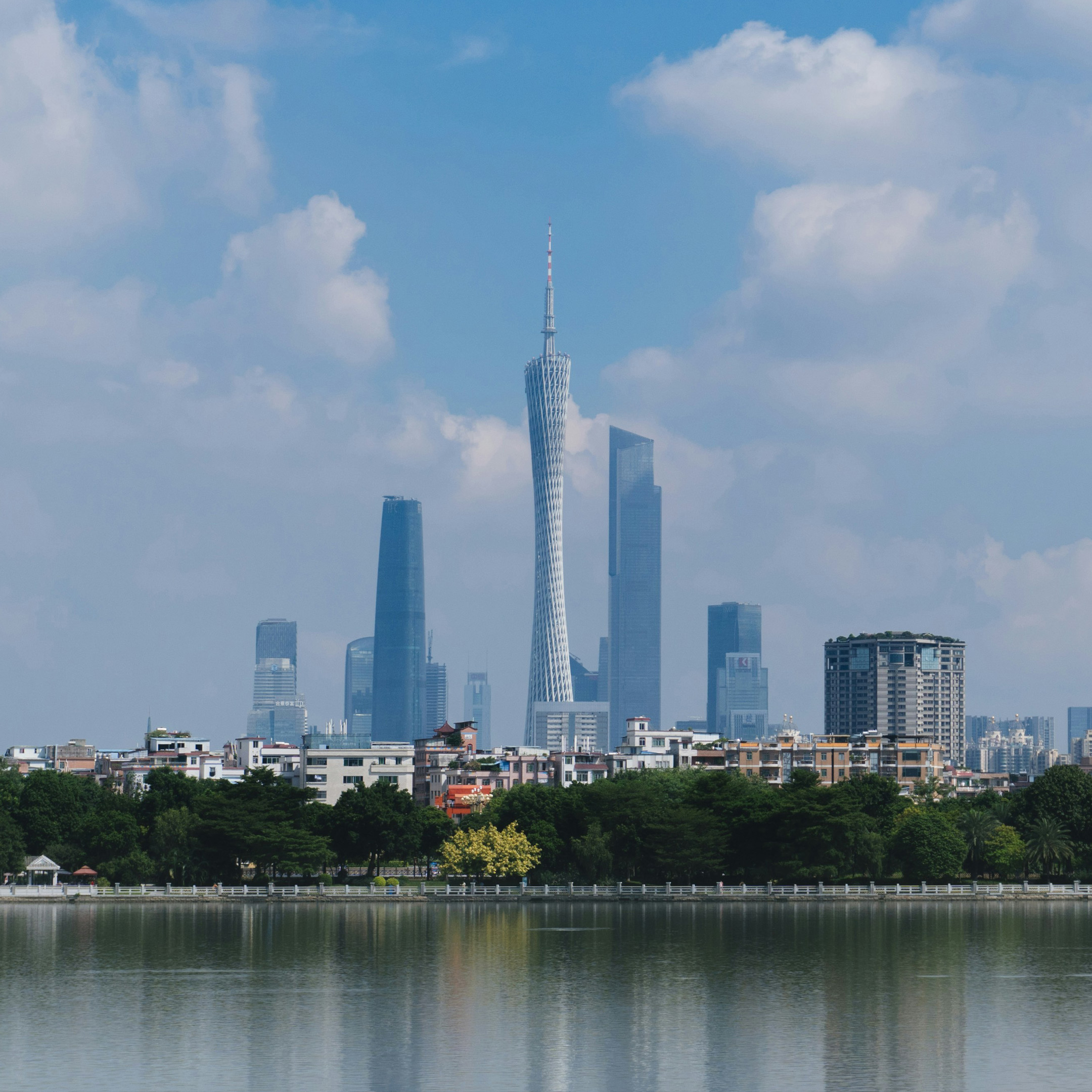
Guangzhou Skyline
Guangzhou

