
Chengdu
Home of the giant panda
Chengdu (成都, Chéngdū) is the capital of Sichuan Province in southwest China, situated on the fertile Chengdu Plain at the western edge of the Sichuan Basin, with the foothills of the Tibetan Plateau rising to the west. The municipality covers a large area that includes the dense urban core, several suburban districts, and mountainous county-level territories extending into the panda-inhabited forests of the Longmen range. With a population of over 20 million, Chengdu is the political, economic, and cultural center of southwest China and one of the country's most important inland cities.
Chengdu was founded in the 4th century BCE and has served as the capital of the Shu kingdom, the Later Shu, and the Sichuan provincial seat through successive dynasties, rarely losing its role as the regional center despite several destructions and rebuildings. The city's association with giant pandas dates to the bamboo forests of the surrounding hills, and today the Chengdu research base on the northern edge of the city is one of the most successful panda breeding centers in the world. In recent decades Chengdu has also become a major tech and financial hub for the interior, while maintaining a reputation for unhurried, teahouse-centered leisure.
Today Chengdu offers visitors a relaxed, food-obsessed city of teahouses, temples, and panda reserves, with a growing modern cultural scene. The Giant Panda Breeding Research Base on the northern edge is the city's most famous attraction, while the Wuhou Shrine, Du Fu's thatched cottage, and the Qing-era Wenshu Monastery give a sense of the city's long past. The narrow lanes of Kuanzhai Alley and the riverside promenades around Jinjiang preserve something of old Chengdu, and the hotpot and Sichuan-cuisine scene, together with a famously unhurried pace of life, gives the city its distinctive flavor.
Highlights
Chengdu Research Base of Giant Panda Breeding
The Chengdu Research Base of Giant Panda Breeding (成都大熊猫繁育研究基地) is the city's signature attraction, a conservation park on the northern outskirts where dozens of giant pandas, and sometimes red pandas, live in forested enclosures.
Early morning is the best time to visit, when the pandas are most active, munching bamboo and climbing structures while visitors learn about breeding and rewilding programs.

Jinli Ancient Street
Jinli Ancient Street (锦里古街, Jǐnlǐ Gǔjiē) is a reconstructed Qing-era pedestrian lane next to the Wuhou Shrine, lined with wooden shopfronts, red lanterns, teahouses, and snack stalls.
Though it is partly aimed at tourists, the narrow alleys, opera face-changing performances, and Sichuan street food make it the liveliest introduction to old Chengdu after dark.

Attractions


Sino-Ocean Taikoo Li
Open-air luxury retail complex around a historic temple


Wuhou Shrine
Temple dedicated to Three Kingdoms heroes Liu Bei and Zhuge Liang

Jinli Ancient Street
Reconstructed Qing Dynasty street with food and crafts


Eastern Suburb Memory
Converted industrial complex turned arts district

Chengdu Research Base of Giant Panda Breeding
Conservation center and giant panda habitat

Du Fu Thatched Cottage
Garden museum honoring the Tang Dynasty poet Du Fu


Jinsha Site Museum
Archaeological museum built over a 3,000-year-old Shu Kingdom site

Wangjiang Tower Park
Riverside bamboo garden with a Ming Dynasty tower

Sanxingdui Museum
Museum showcasing a mysterious 3,000-year-old Bronze Age civilization

Mount Qingcheng
Sacred birthplace of Taoism and UNESCO World Heritage Site

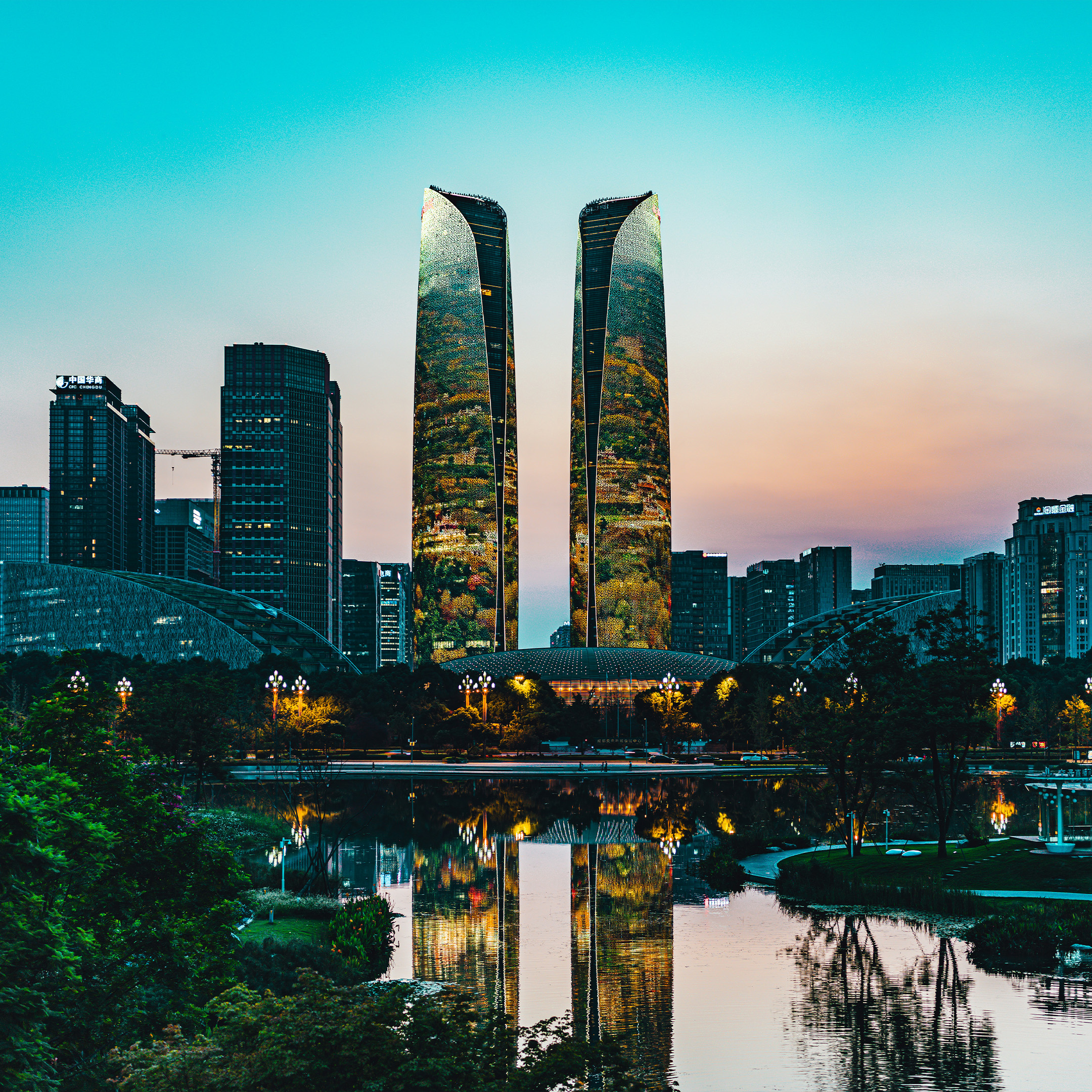
Chengdu Skyline
Chengdu

